
Ayetoro, once known as the “Happy City,” is now a community grappling with an uncertain future. Founded in 1947 as a utopian settlement, Ayetoro thrived for decades, sustained by a deep connection to its coastal environment and a robust fishing industry that defined its cultural and economic life. Today, however, the community faces an existential crisis due to relentless coastal erosion, rising sea levels, and environmental degradation. The ocean has swallowed homes, livelihoods erased, and traditions lost. The same waters that once sustained Ayetoro’s people have become a threat to their survival.
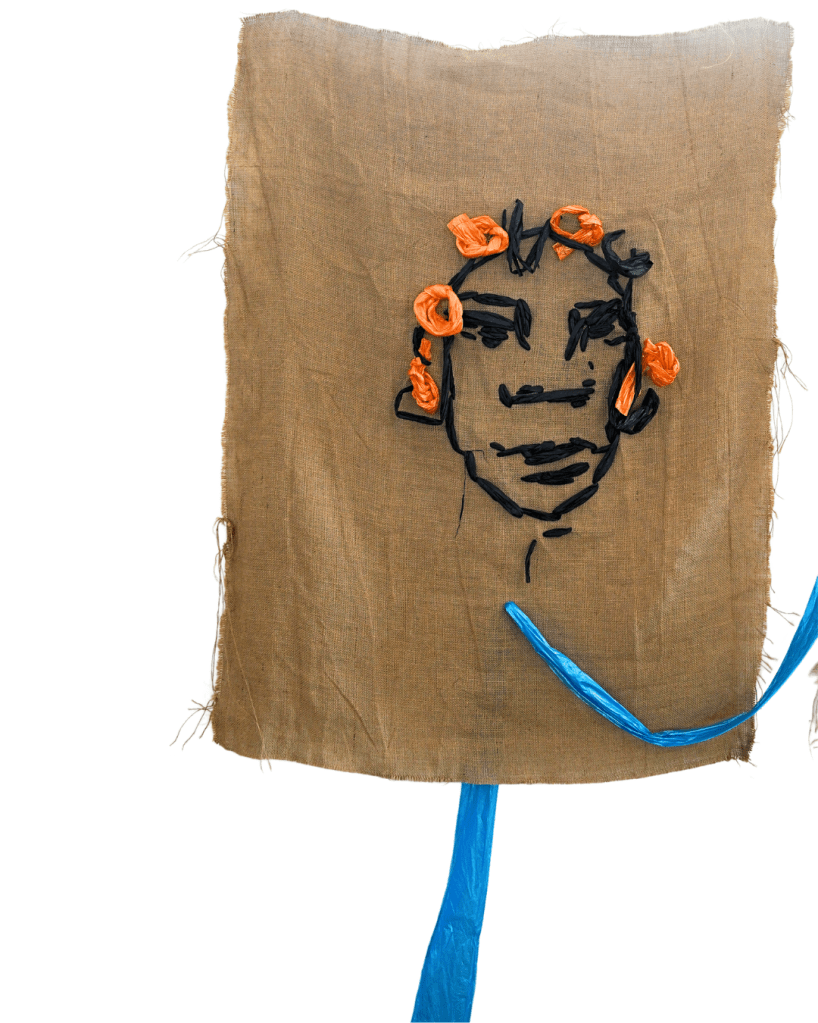
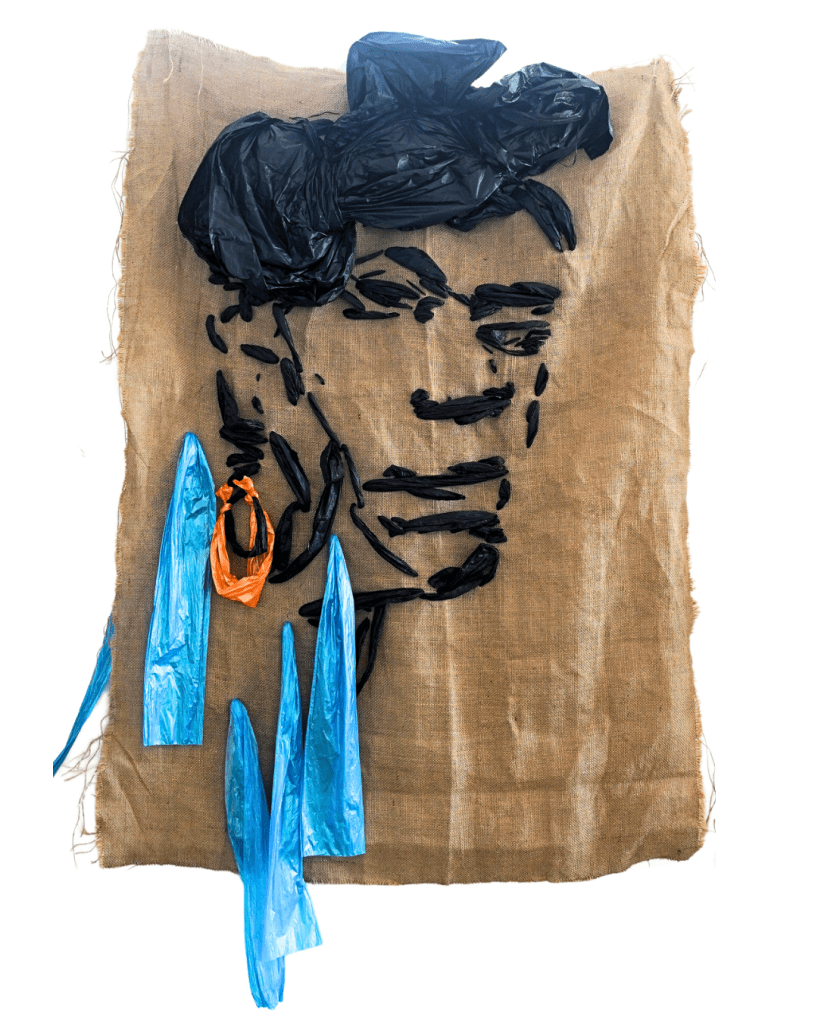
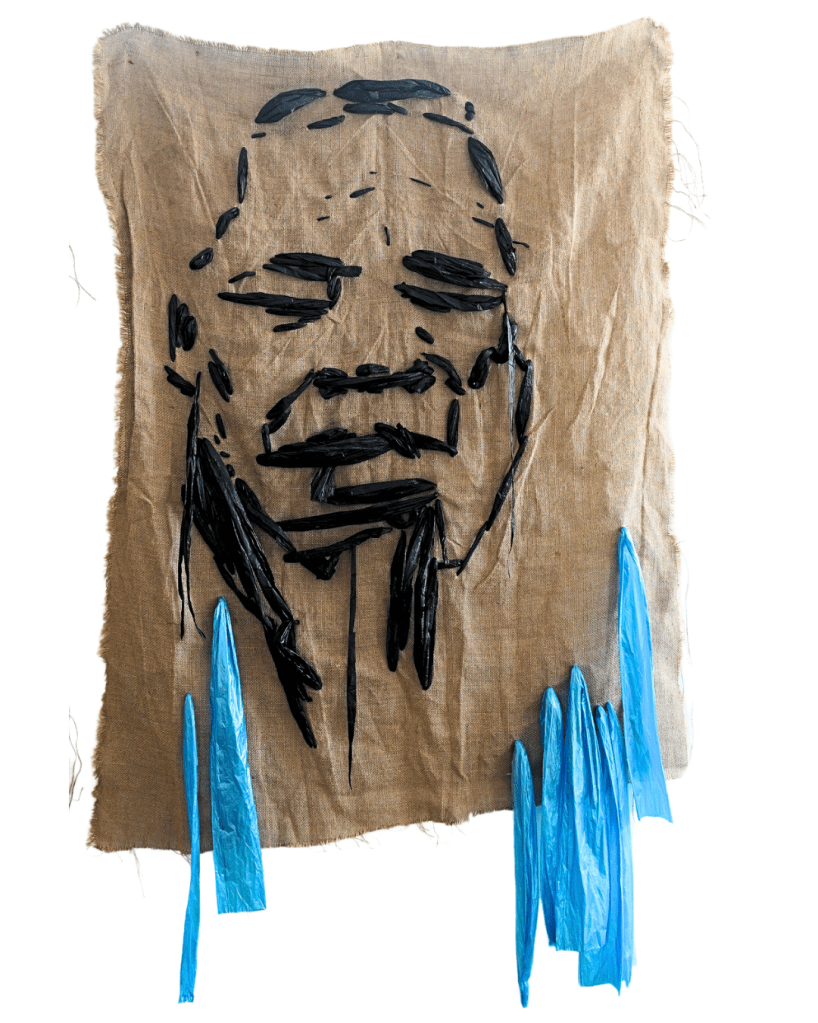
This series of artworks, are portraits of three generations of women embroidered onto jute using repurposed bin bags as thread. It seeks to document the weight of these changes while gesturing toward resilience, continuity, and hope. Through materiality and process, I explore the intersection of memory, environmental destruction, and the enduring spirit of those who navigate loss yet continue to envision a future.

The Weight of Loss and Change
In Ayetoro, fishing was more than an occupation; it was a way of life passed down through generations. Fishermen and traders stored dried fish in jute sacks—an object that became synonymous with sustenance, community, and tradition. Today, that practice has been forcibly abandoned. As the coastline recedes and seawater floods homes, fishing is no longer viable in the way it once was. The jute sack carries the weight of this lost heritage. By using jute as the foundational material for these portraits, I aim to preserve the memory of a practice that once anchored Ayetoro’s identity.
The three embroidered figures—an elderly woman, a middle-aged woman, and a young girl—represent the continuum of time, where knowledge, stories, and survival strategies are passed from one generation to the next. But what happens when the physical and cultural environment that sustained this transmission collapses? How do the women of Ayetoro, who have always been pillars of the community, rewrite their own narratives amid displacement and uncertainty? These portraits are both a remembrance of the past and a question about what remains.
Material as Metaphor: Bin Bags as Thread
I chose to use waste bin bags, plastic materials typically associated with disposability and pollution, as the embroidery thread. It reflects the ecological crisis at play, as plastic pollution increasingly infiltrates water bodies, affecting marine life and human health. It also serves as a commentary on resourcefulness and adaptation; in the face of destruction, communities often find ways to repurpose what remains. The act of embroidering with discarded materials becomes a form of reclamation of history, of agency and of the ability to create despite circumstances that seem insurmountable.
Plastic, especially single-use plastic, has become both a symbol of modern convenience and an emblem of environmental catastrophe. Ayetoro’s waters, once teeming with fish, are now polluted by plastic waste, further compounding the loss of fishing livelihoods. Yet, in my work, these same waste materials are transformed into threads that stitch together fragmented memories, reflecting a stubborn refusal to surrender to despair.
The Crisis: Coastal Erosion, Displacement, and the Fight for Survival
Ayetoro’s battle with coastal erosion has been long and devastating. Over the past few decades, the town has been repeatedly battered by ocean surges that have swept away entire sections of land, forcing thousands of residents into displacement. The destruction has not only been physical but also psychological, as a once-thriving community now faces the prospect of complete disappearance. The people of Ayetoro, despite their repeated pleas for action, continue to suffer the consequences of environmental negligence and climate change.
The most recent surge, which displaced over 5,000 people, underscores the urgency of Ayetoro’s situation. Homes, schools, and places of worship have been reduced to debris, while families are left to navigate the trauma of losing their ancestral land. This series seeks to amplify these realities, making visible the struggles that often go unnoticed beyond the affected communities.
Blue Plastic: A Gesture of Hope
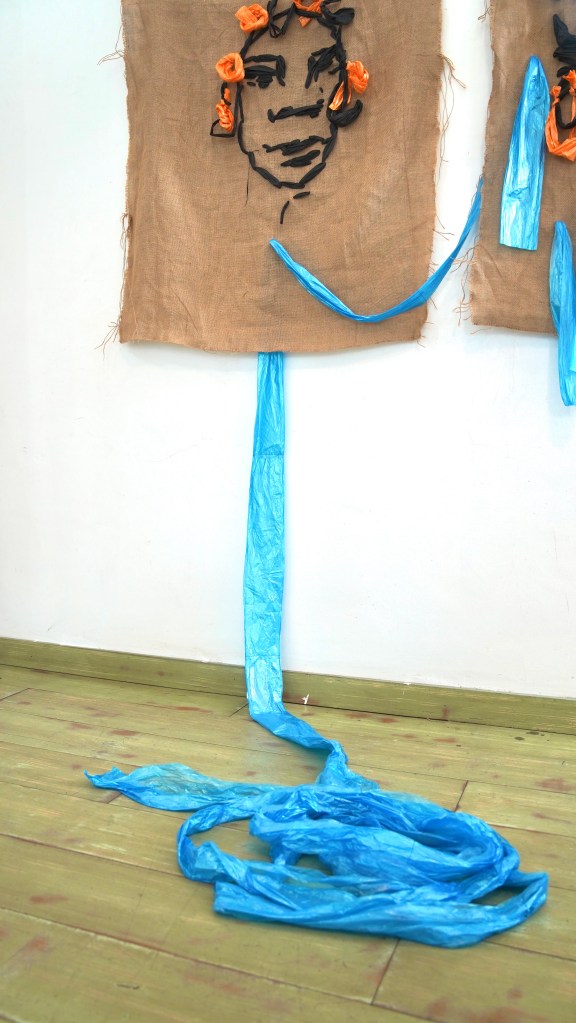
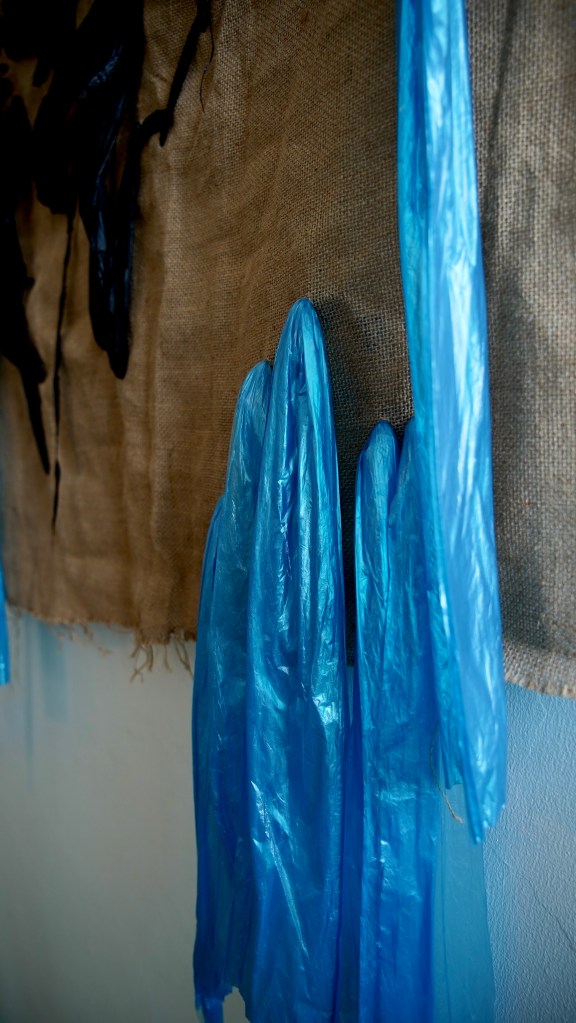
Amidst the weight of loss, I have incorporated blue plastic details into the artworks. This blue is not just a reference to water, but to the potential of renewal and restoration. It embodies a vision of a future where Ayetoro’s waters are not a source of destruction but of sustenance once again. It is a nod to the ongoing fight for environmental justice and a hopeful assertion that communities like Ayetoro deserve a future where they are not merely surviving but thriving.
The blue plastic acts as a visual and conceptual counterbalance to the black bin bag threads, suggesting that even within despair, there are possibilities for reclamation. This is not an idealistic hope but a defiant one—the kind of hope that demands action, that refuses to let history be erased, and that insists on the right to exist and to dream.

Beyond the Canvas: Art as Documentation and Advocacy
Art has the power to bear witness, to document history, and to influence discourse. While Ayetoro’s crisis has been covered sporadically in the media, it remains largely on the margins of national and international conversations about climate change and environmental displacement. Through these works, I seek to contribute to the ongoing narrative, providing a textured and deeply personal account of how climate crises are not just about statistics or policy failures but about real people, real communities, and real losses.
By embroidering portraits instead of painting them, I emphasize slowness and labor, reflecting the painstaking nature of survival and adaptation in Ayetoro. Each stitch is a mark of persistence, each thread a reminder that history is not just something that happens—it is something that must be actively preserved, retold, and fought for.
The crisis in Ayetoro is not an isolated event, it is a microcosm of a much larger global struggle. Coastal communities from Bangladesh to Louisiana face similar threats of rising sea levels, displacement, and environmental collapse. Through this work, I hope to highlight the urgent need for global cooperation in addressing climate change, environmental justice, and sustainable solutions. Ayetoro’s story is part of a collective human narrative, reminding us that the fight for climate resilience is one we all share.
The story of Ayetoro is one of both loss and resilience. As the waves claim more land and uncertainty looms, the people of Ayetoro continue to fight for their right to exist. This series, through its materiality, process, and imagery, stands as a tribute to their endurance and a plea for intervention.
It asks us all to bear witness,
to remember, and
to act.
Showing at Didi Museum
175, Akin Adesola Street, Victoria Island Lagos, Nigeria
30th March- 12th April 2025.
 HANEEFAH ADAM
Leave a comment