Reclaiming Discarded Material: Waste, Memory, and Material Transformation in Contemporary Practice
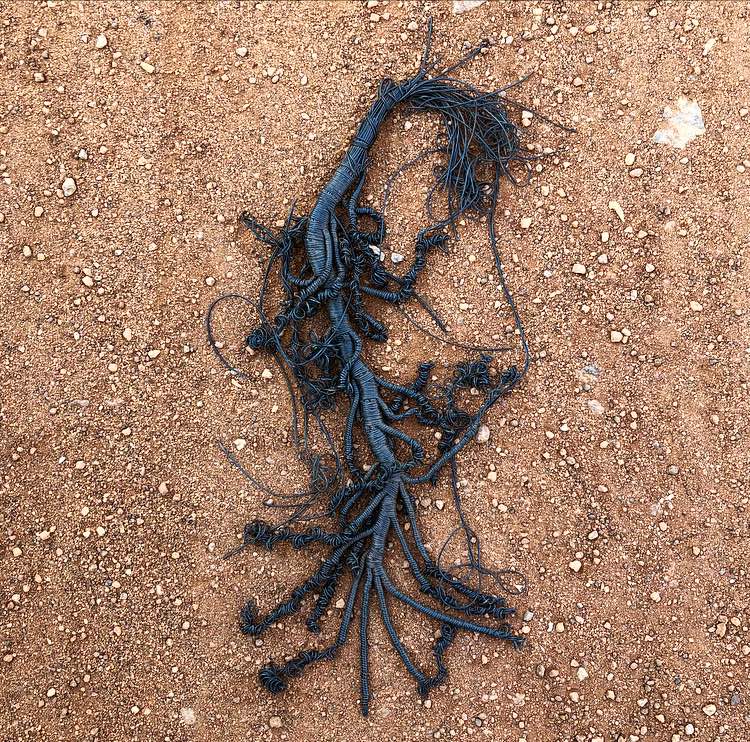
Material often enters artistic practice through intentional selection, carefully sourced pigments, canvases, metals, or textiles. Yet in many contemporary practices, particularly within Global South contexts, material enters the studio through chance encounters. My recent sculptural work began with such an encounter: a discarded kiko rubber thread lying on brown earth, stretched and stripped of its original purpose.
Photography by Haneefah Adam, 2018.
Kiko threads (rubber) are commonly used in Nigeria to bind and secure hair. Their everyday function is practical and temporary: tightening, fastening, restraining. Once worn out, they are discarded. Actually, they are reused sometimes but ultimately discarded after the elasticity is gone.
Encountering this abandoned object prompted questions central to contemporary discourse on materiality and waste: What happens to objects once their utilitarian function ends? What cultural or ecological narratives remain embedded within them?
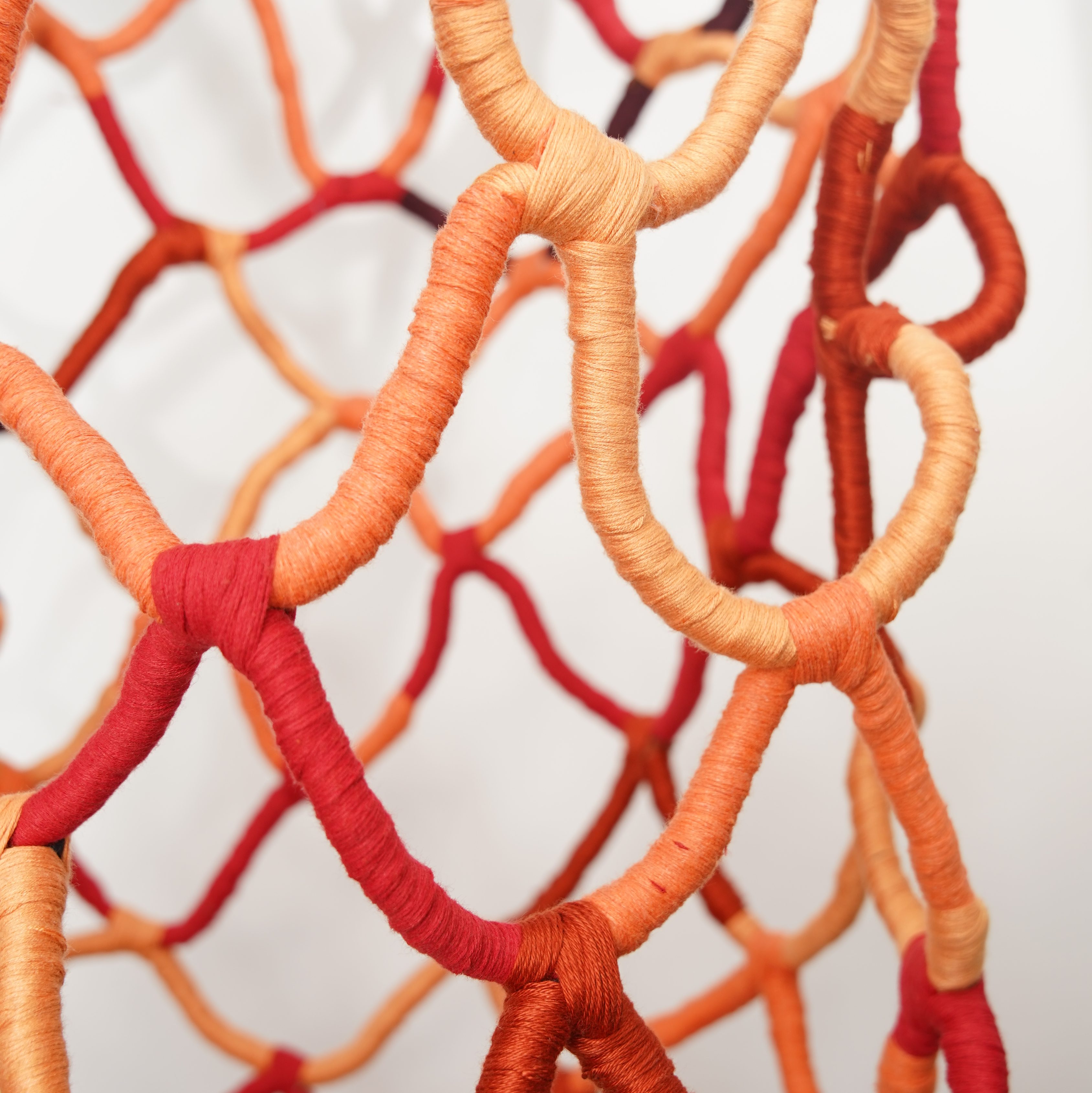
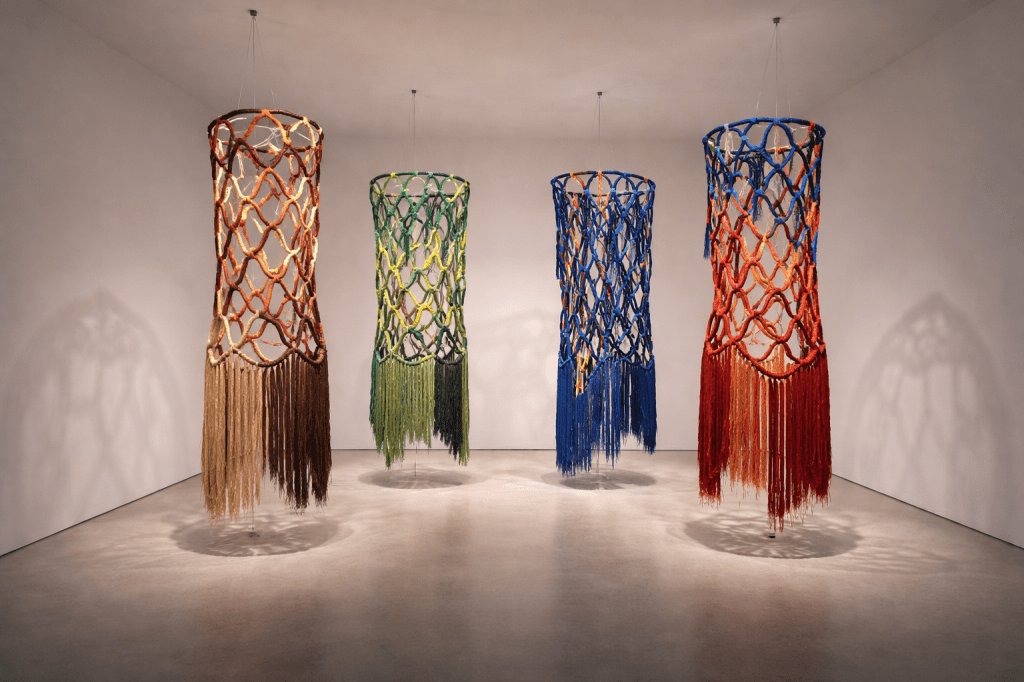
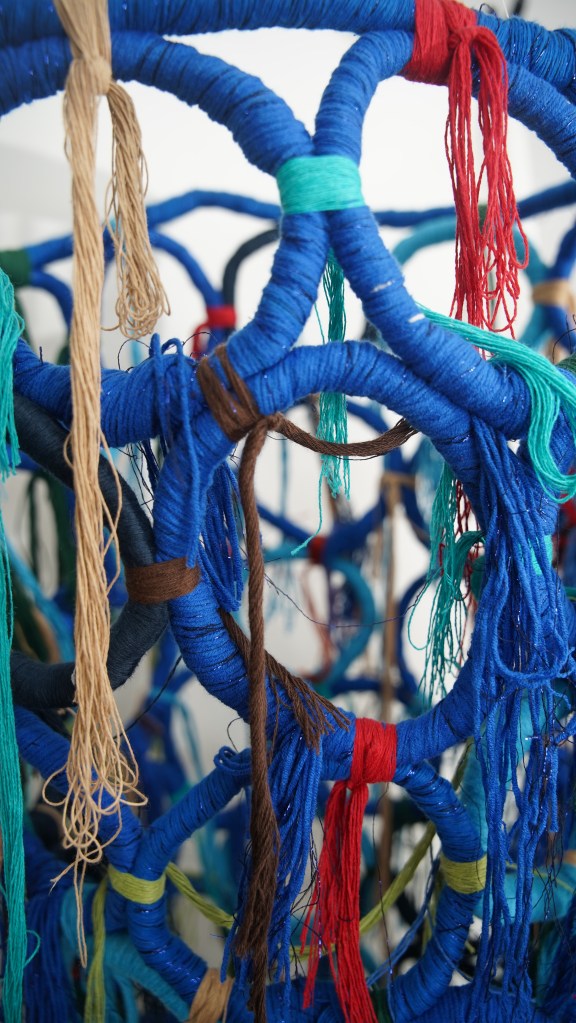
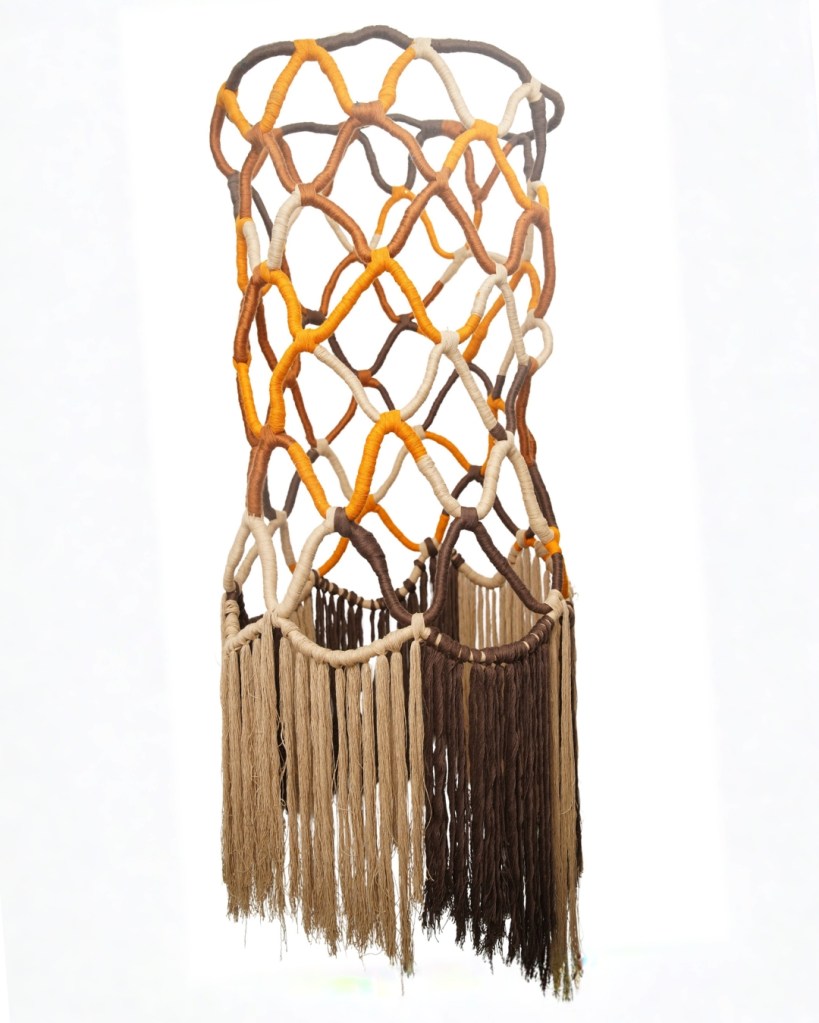
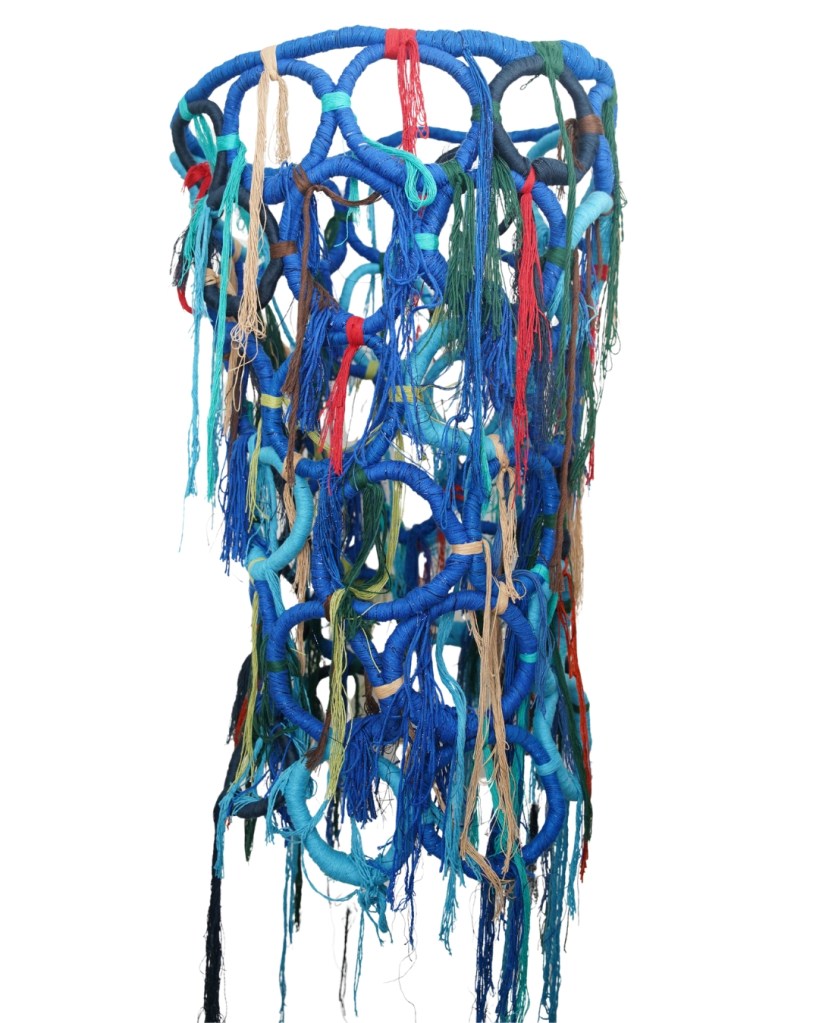
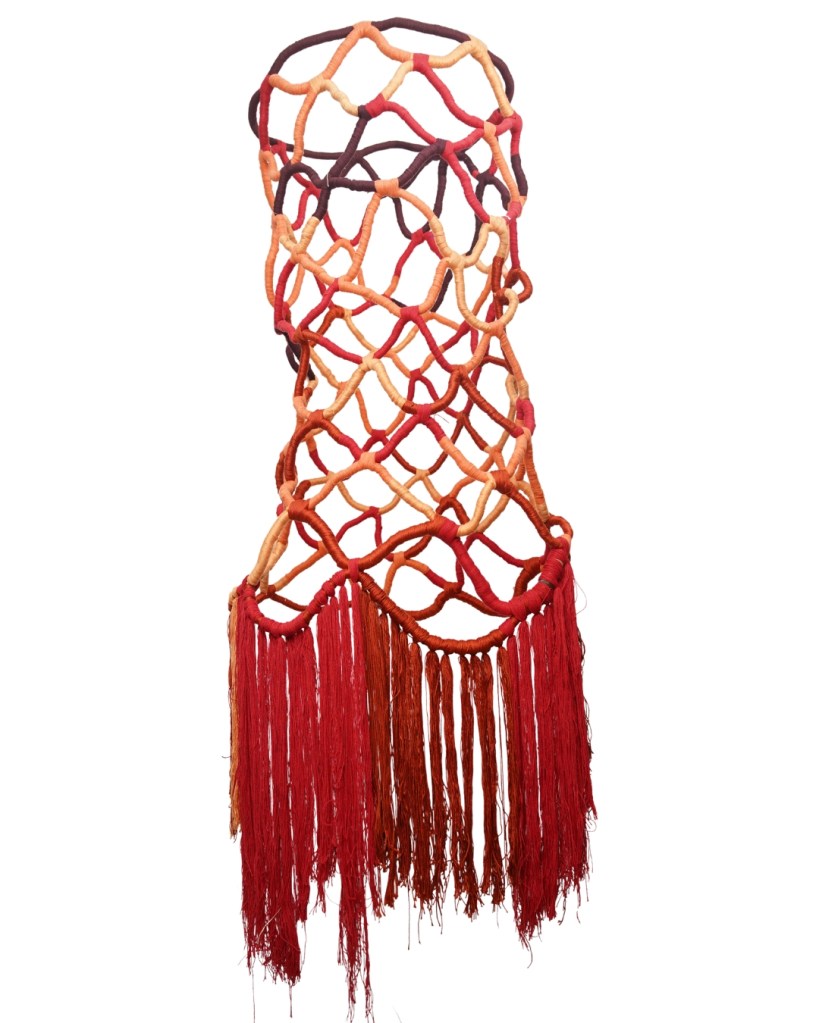
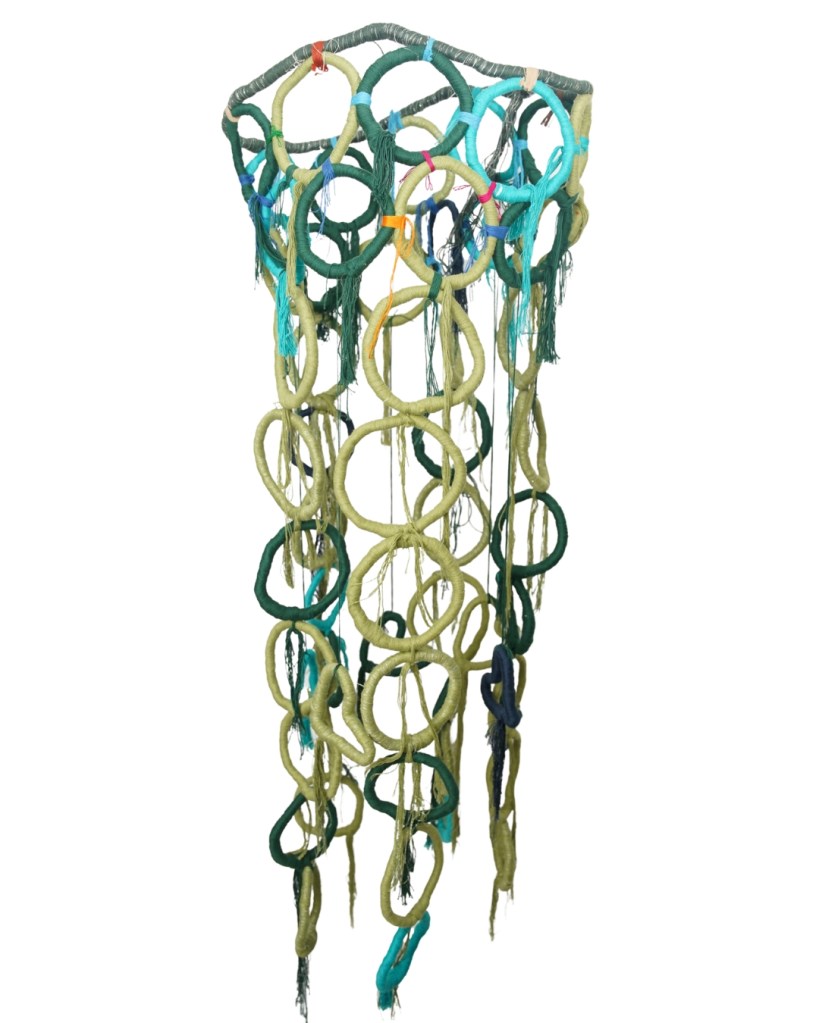
Rather than treating the thread as refuse, I brought it into the studio and began a process of binding pre-used fabric with yarn. Through repetitive manual labour, they were transformed into sculptural structures resembling root systems, vascular networks, or skeletal frameworks. This process allowed the material to shift from a tool of compression into a porous, open architecture.
Waste as Material: Recontextualization and Circular Economies
The transformation of discarded objects into artworks has long been a strategy within contemporary art. Artists such as El Anatsui, whose monumental tapestries are composed of recycled bottle caps, have demonstrated how discarded materials can operate as carriers of social, historical, and economic meaning. Similarly, Ibrahim Mahama’s installations using worn jute sacks examine global commodity circulation and labour histories.
My work with kiko threads situates itself within this broader conversation but emerges specifically from the material culture of everyday Nigerian life. In the process of threading, I am reassigning its function. The thread transitions from an instrument of restraint into a structure that expands outward. In this way, the work participates in what theorist Tim Ingold describes as a “correspondence with materials,” where the artist works with the tendencies and histories embedded within matter rather than imposing form upon it.
Labour, Motherhood, and Embodied Material Practice
The sculptural forms produced through this process evoke organic systems such as roots, veins, or neural networks. These structures mirror the unseen forms that sustain life: underground growth, circulatory systems, and connective tissue.
Equally important is the process itself. Wrapping thread around fabric and binding it with yarn is slow, repetitive labour. The gestures involved echo domestic acts of repair and maintenance that often go unrecognized within formal economic structures.
Within my broader practice, which frequently explores motherhood, care, and inheritance, these gestures become a form of embodied knowledge. The sculptures reference what feminist scholars such as Silvia Federici have described as “reproductive labour”. The invisible work that sustains families, communities, and societies.
In this sense, the material transformation parallels the social labour of holding things together. The thread once physically held objects in place. Through the sculptural process, it becomes a metaphor for the emotional and physical labour required to sustain relationships, families, and cultural memory.
Material Memory and Cultural Context
In many Nigerian contexts, reuse is not framed as sustainability in the contemporary Western sense but as an everyday economic and cultural practice. Objects circulate beyond their intended lifespan through repair, adaptation, and repurposing.
This cultural orientation toward reuse informs the conceptual framework of the work. Rather than presenting waste as an environmental crisis alone, the sculptures examine waste as latent material potential. They are viewed as objects waiting to be reassigned meaning.
The structures created from kiko thread retain traces of their past function: tension, strain, and compression. Each bend and knot carries evidence of previous use. These traces operate as what archaeologist Michael Schiffer calls “material residues of human behaviour.”
By elevating the thread from roadside debris to sculptural object, the work shifts attention to the histories embedded within overlooked materials.
From Ground to Gallery: Reassigning Value.
Contemporary art increasingly engages with questions of material circulation, ecological responsibility, and global inequality. Artists working across Africa, Latin America, and Asia have foregrounded discarded materials to interrogate systems of extraction, labour, and consumption.
This body of work contributes to that discourse by focusing on material afterlives. Through the transformation of kiko rubber thread, the sculptures investigate how discarded materials can become carriers of memory, labour, and cultural knowledge. They examine how everyday objects can be repositioned as structures that hold new meaning.
What began as roadside debris becomes sculptural architecture.
In doing so, the work asks a broader question relevant to both material culture and contemporary art: what we carry does not disappear- it reshapes us.
 HANEEFAH ADAM
Leave a comment